



Paint Fresh Stucco — The Right Way
07/11/2015 | Dunn Edwards |

When determining the right moment to paint your client's fresh stucco, many assume that the surface's dry time is the most important factor. While time does play a role, the better question is not just whether you can paint stucco, but whether the fresh stucco has cured enough to avoid color burnout and other coating problems. In addition, there are other considerations to keep in mind — such as the amount of moisture available from rainfall, humidity or the application, itself.
For example, manual hydration and/or rainfall can help lower the pH level and speed up the curing process. Therefore, the most important dynamic is the extent of the stucco's curing and its pH level, not the amount of time elapsed since the stucco was applied.
Painting Stucco
Traditional cement-based stucco is not hydrophobic. It is porous and needs sufficient moisture during curing, since water is essential to the hydration reaction that allows the material to harden and gain strength. This is why moist curing over several days is commonly recommended.
Freshly applied stucco tends to be highly alkaline or have a high pH. pH, in the context of cement-based materials such as stucco, measures how acidic or alkaline the surface pore solution is when moisture is present, with 7 being neutral, values below 7 acidic, and values above 7 alkaline. When first applied, new stucco can have an alkalinity as high as 13 but — as it cures — the reaction binds the lime in the mix and causes the pH to drop. For the reaction to continue and full curing to occur, it must have water. Without the use of a high-pH-resistant primer, most manufacturers do not recommend painting stucco unless the pH level is 10 or below. If properly hydrated, stucco will easily attain a pH in the range of 8 or 9, if properly hydrated.
So what happens if paint is applied to stucco when the pH balance is too high? Most commonly, a "burning" may occur, which may appear as a dulled sheen or mottling of the coating and, eventually, leads to paint deterioration. At this point, it's best to realize that the damage is done, as the further addition of water may aggravate the situation and cause chipping and delamination.
Unfortunately, there is no magic number for how long stucco should cure before painting, because the pH level must drop to an acceptable level first. That said, we can provide best practices for stucco painting to help ensure the job goes smoothly.
How to tell fresh stucco is ready to paint
If you are asking, how do you paint stucco, the first step is making sure fresh stucco has cured enough to apply paint without burnout, discoloration, or early failure. Since there is no fixed number of days that works in every case, it is better to check the wall itself instead of relying on the calendar.
Check the pH first
The safest time to paint fresh stucco is when the pH has dropped to 10 or below. If the pH is still too high, the paint can lose color, look uneven, or break down sooner than expected.
Make sure the wall has been properly hydrated
Stucco needs water to cure well. If it dries too fast, the curing process may slow down and the pH may stay too high for longer. Walls exposed to strong sun, wind, or heat may need more attention than shaded areas.
Look at the exposure conditions
South- and west-facing walls often dry faster and may need more wetting than north- or east-facing walls. Weather conditions such as heat, wind, and low humidity can also affect how quickly the surface becomes paint-ready.
Do not rely on time alone
Even if the stucco looks dry, that does not mean it is ready for paint. A wall may still be too alkaline if it has not cured enough. Testing the surface is more reliable than guessing based on days alone.
How to hydrate, test, and prime stucco before painting
As mentioned earlier, stucco hydration is influenced by many factors, including humidity, temperature, wind and direct sunlight. Therefore, proper hydration is vital when preparing a stucco surface for paint. To hydrate a wall, apply water with an even spray over the entire surface until it begins to run off. Allow the wall to absorb the water and repeat several times. The surface may need to be hosed several times per day for several days. The need for additional wetting can be dictated by the exposure conditions, wind, humidity, temperature and orientations. For example, south- and west-facing walls may require more than north- or east-facing walls. Continue to hydrate the surface until it lowers to the desired pH level.
The most commonly used method to determine pH is with a pH pencil (which can be obtained from most paint distributors) and distilled water. Scratch a small area on the test surface and wet it with distilled water. A color chart is provided to match the color of the test area with the corresponding pH color level.
When people ask, how do you paint stucco, one important step is to prime it first so the coating performs better. A good, alkali-resistant primer will help your coating provide greater coverage and better performance.
Stucco preparation checklist before painting
For successful stucco painting, the next step after curing and pH testing is proper surface prep. This helps the coating bond better, improves coverage, and reduces the risk of early paint failure.
Clean the surface
Remove dirt, dust, and other surface buildup before painting. If the wall has mildew, chalk, or other contamination, clean that first so the primer and paint can bond to a sound surface.
Repair cracks and damaged areas
Inspect the stucco for hairline cracks, chips, or other weak spots. Small cracks are common in new stucco, but they should still be addressed before painting so moisture is less likely to get behind the coating.
Let the repairs and washing dry fully
If the wall has been cleaned or patched, allow it to dry fully before moving on to primer. A surface that still holds extra moisture can affect adhesion and may lead to future coating problems.
Prime before painting
A quality alkali-resistant primer helps separate the stucco from the finish coat. It can also improve coverage, reduce moisture draw, and support better long-term performance.
Use the right application method
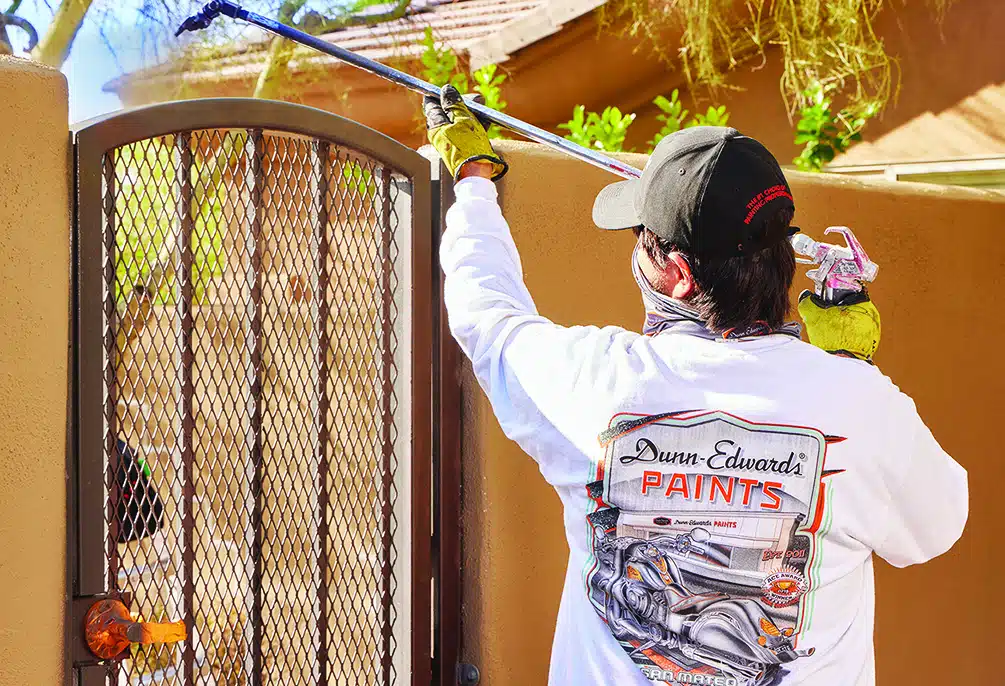
Spray application followed by back rolling helps push the coating into the surface and fill small voids. This can improve film build and help protect the finish over textured stucco.
Dunn-Edwards [PRODUCT#ESPR00] can be applied to new stucco with a pH level of 13 or lower. Hairline cracking is very common with new stucco, which can allow moisture to penetrate and activate any residual salts. These salts can migrate to the paint surface and attack the coating. Dunn-Edwards FLEX-PRIME® Masonry Primer can help to bridge these cracks and stay flexible to minimize future cracking. For additional protection, top-coating the alkali-resistant primer with an ultra-premium finish such as Dunn-Edwards [PRODUCT-PAGE#evershield] Ultra-Premium Exterior Paint will also promote color retention and minimize burnout. Spray application and back rolling will produce optimal results, as it forces the coatings into the stucco and fills voids that may allow moisture penetration and alkali migration to the surface.






FAQS
How long should fresh stucco cure before painting?
Most manufacturers recommend letting fresh stucco cure for at least 28 days with proper hydration before painting. After that, confirm the stucco is fully cured and the pH is 10 or below, since weather and moisture can affect drying time.
How can you tell if fresh stucco is ready to paint?
Test the surface instead of guessing by time alone. If the pH is 10 or lower, the stucco is generally ready for paint. If you are choosing products next, see FLEX-PRIME Select masonry primer and EVERSHIELD exterior paint.
Do you need to clean or repair stucco before painting?
Yes. The surface should be clean, dry, and in good condition before painting. Remove dirt, chalk, and mildew, and repair visible cracks first.
Do you need a primer on fresh stucco before painting?
Yes. Primer helps improve adhesion, coverage, and long-term performance. For new stucco, FLEX-PRIME Select is a strong option, followed by a durable topcoat like EVERSHIELD.