


Principles
Dunn-Edwards is firmly committed to the over-arching green principle of eco-efficiency. We define “eco-efficiency” as the ability to satisfy human needs in ways that minimize adverse impacts on energy and material resources, environmental quality and human health and safety. For us, eco-efficiency means: “do more good,” by optimizing the performance of our paint products, and “do less harm,” by reducing or avoiding the use of harmful ingredients. Other green principles flow from the principle of eco-efficiency: resource conservation, energy efficiency, waste minimization, recycling, emissions reduction, health and safety protection, and social responsibility.

PRODUCTS



What makes Dunn-Edwards paint greener?
It’s not only the performance we put into our paint, but also what we leave out. Dunn-Edwards constantly seeks to reduce or avoid the use of potentially harmful ingredients. Consequently, our paint formulations do not include – among other things – asbestos, benzene, cadmium and chromium pigments, chlorinated solvents, dioxin, ethylene glycol, formaldehyde, lead, mercury, methylene chloride, or phthalates.
 Transcript
Watch the video with transcripts on a dedicated page
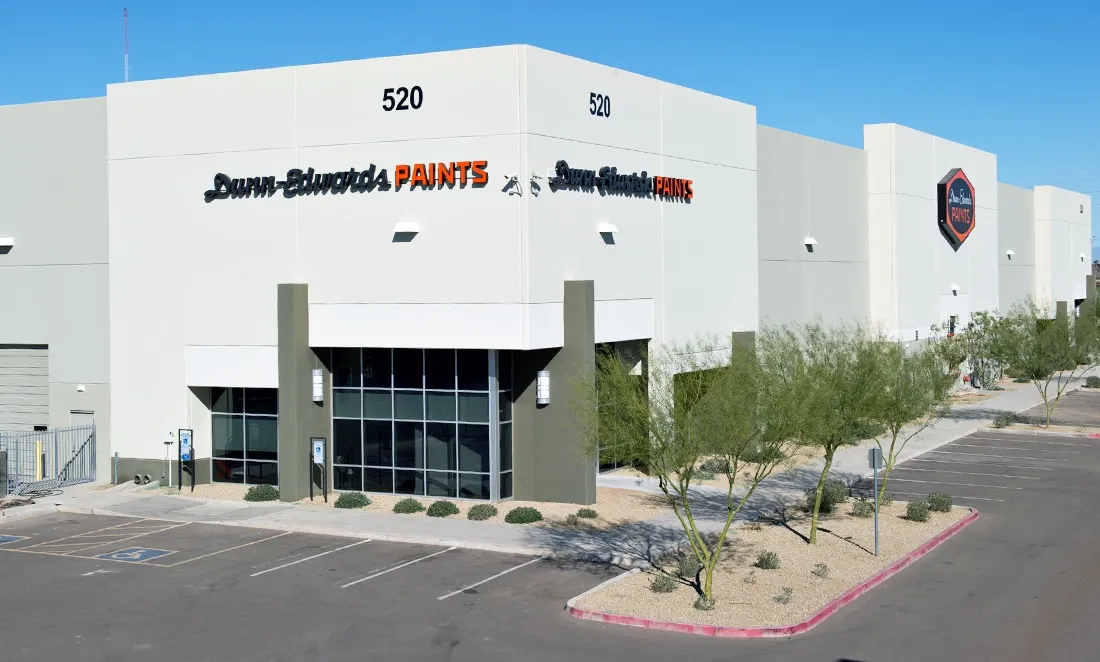
OUR LEED® GOLD CERTIFIED PAINT FACTORY
Practices
Dunn-Edwards is absolutely committed to full compliance with all applicable environmental, health and safety laws and regulations. This commitment extends companywide, from senior management through staff in all departments. Beyond compliance, Dunn-Edwards has a long history of proactively doing more than required, often taking action before any requirement exists.

Find participating recycling stores
Dunn-Edwards has partnered with PaintCare™, a non-profit that collects, recycles and safely disposes of open paint cans. If you’re a California resident, enter your ZIP code to find a recycling location near you.
To view national PaintCare drop-off locations or learn more information, visit paintcare.org
Carbon Capture and Utilization (CCU) Technology with Celanese
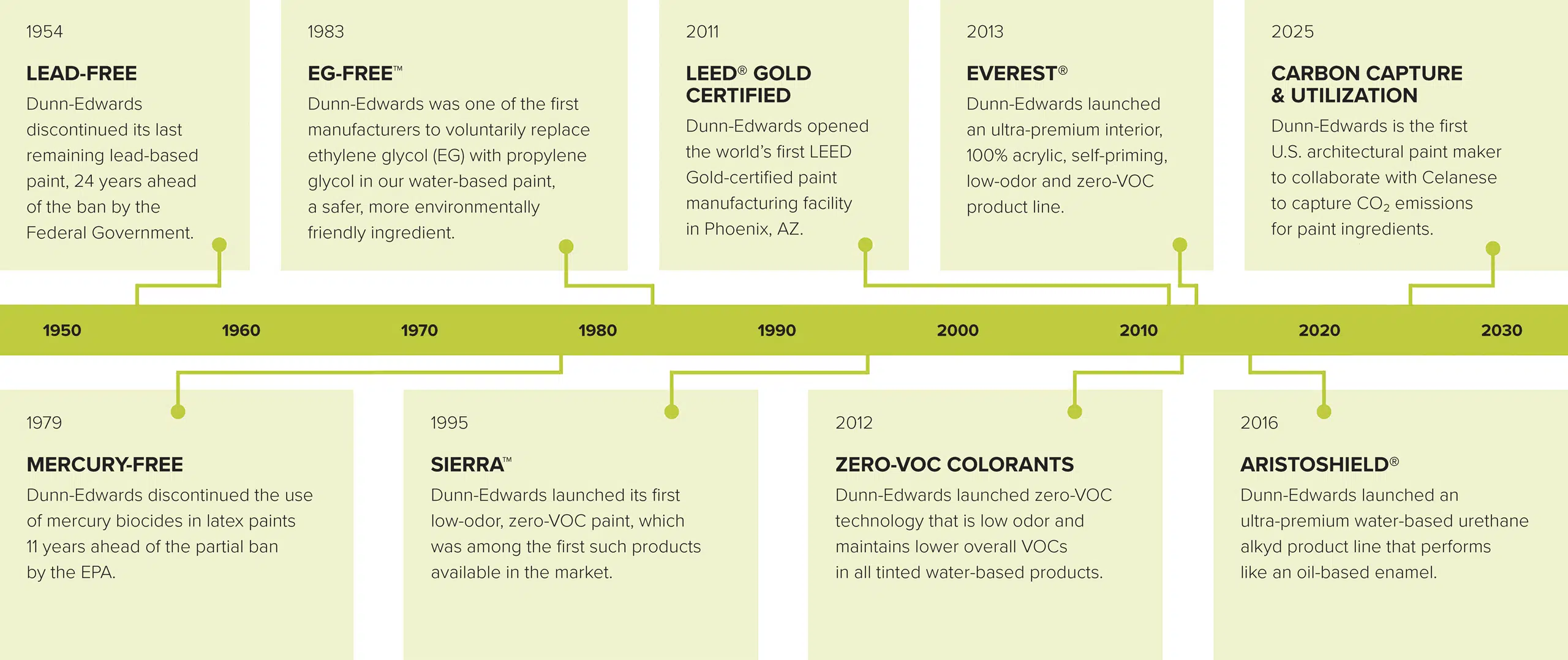
In collaboration with Celanese Corporation, Dunn-Edwards is the pioneer of Carbon Capture and Utilization (CCU) technology in the U.S. architectural coatings industry. This innovative process captures industrial CO2 emissions and transforms them into key ingredients for our paints. The resulting paint products offer a lower carbon footprint and contribute to a more eco-efficient built environment.
PEOPLE
Dunn-Edwards respects the inherent worth of each individual, and we strive to conduct all our business with the highest sense of ethics, integrity and responsibility.




PAINTING GREEN ARTICLES
“Sustainability” has long been the watchword of the green building movement. There are times, however, when the concept of sustainability can be difficult to grasp or put to use in practical, clearly meaningful ways.
LEARN MORE about “Sustainability” has long been the watchword of…

What Is Zero-VOC Paint, and Is It Better for Indoor Air Quality?
Zero VOC paint contains no added volatile organic compounds (VOCs), the carbon-based chemicals that off-gas into the air and reduce indoor air quality. Dunn-Edwards introduced Zero-VOC colorants in 2012, well ahead of regulations, and also leaves out ingredients like formaldehyde, mercury, and lead. That means a healthier space for you and lower environmental impact.
What Is a LEED Gold Certified Paint Factory?
A LEED Gold certified paint factory meets strict green building standards for energy efficiency, water conservation, waste reduction, and air quality. Dunn-Edwards Corporation opened the world’s first LEED Gold certified paint manufacturing facility in Phoenix in 2011. The 336,000-square-foot plant uses dust-suppression technology, advanced washwater processing, and recycles more than 95 percent of its process waste.
What Is Carbon Capture and Utilization (CCU) Technology in Paint?
Carbon Capture and Utilization captures industrial carbon dioxide emissions before they reach the atmosphere and transforms them into usable paint ingredients. In 2025, Dunn-Edwards partnered with Celanese to become the first company to bring this technology to the U.S. architectural coatings industry. The result is high-quality paint with a lower carbon footprint.
Is Dunn-Edwards Paint Good for LEED and Green Building Projects?
Yes, Dunn-Edwards paint supports LEED and other green building projects by meeting strict standards for low emissions and eco-efficiency. Zero-VOC and low-VOC options help satisfy indoor air quality requirements, and product documentation and certifications are easy to download. This makes specifying eco-friendly paint simple and reliable for your project.
What Does "Greener by Design" Mean at Dunn-Edwards?
Greener by design is the Dunn-Edwards commitment to eco-efficiency in everything from paint formulations to manufacturing and delivery. It rests on one simple idea: do more good by improving how paints perform, and do less harm by reducing or avoiding potentially harmful ingredients. This philosophy shapes every product and practice across the company.